


 REBECCA ANDREWS
PhD in Biometrics and Statistics
Dr. REBECCA ANDREWS holds a PhD in Biometrics and Statistics with specialization in non-parametric methods. With over 20 publications, she is the co-author and the biostatistician of studies published in top rank medical journals such as the Journal of the American Medical Association (JAMA), the American Journal of Public Health (AJPH) and Pediatric Emergency Care and Vaccine.
During her graduate years she worked as a fellow researcher at the London School of Economics. After she earned her doctorate Dr. Andrews worked as biostatistician at Columbia University Medical Center and at the Mailman School of Public Health. During her extensive career as biostatistician she has advised many graduate students with their dissertations in the fields of medicine, sociology, nursing, and psychology.
- Expert in mobile health (conducted the first largest randomized clinical trials in the country to determine the impact of text messaging to improve immunization rates and medication adherence in hard-to-reach populations).
- Conducted research in clinical pediatrics (immunizations, URIs, obesity).
- Expertise applying hierarchical models to complex data structures.
- Bilingual Spanish-English; able to translate/adapt surveys or other data collection into Spanish.
Dr. Andrews walks her students through all the steps needed for completing solid and sound research: (1) formulating the study hypothesis; (2) selecting and collecting data (e.g., interviews, surveys, administrative records); (3) designing a sample plan (simple random, systematic, stratified or clustered sampling, or more complex designs); (4) database structure; (5) data cleaning and consistency checks; (6) appropriate analysis from data description and bivariate analysis (student t-test, chi-square, McNemar test of marginal homogeneity) to multivariable analysis (linear regressions, MANOVA, mixed-effects or multilevel models). She helps students select the most appropriate techniques given the nature of their data—continuous or categorical variables, small or large samples.
Dr. Andrews has expertise in working and programming with various statistical packages such as SPSS and SAS and Stata.
“It was a pleasure working with Rebecca. I particularly appreciated her flexibility in scheduling meetings, her promptness in responding to my statistical questions, and her assistance with conducting sophisticated analyses related to my thesis project.” Annika Hofstetter, Research Fellow, New York- Presbyterian Hospital, Columbia University Medical Center
“Rebecca provided me with invaluable technical, statistical support and training for my dissertation. She challenged my thinking, conducted flawless analytical work, and made me a stronger quantitative researcher. Rebecca’s mastery of statistics and different modeling and analytical techniques made solving complex data challenges easy and manageable. She was 100 percent reliable, thoughtful, understanding, and engaged. She often re-arranged her schedule to meet last-minute dissertation deadlines. Even though Rebecca was not a formal member of my dissertation committee, I consider her my most active member. I am certain that by working with Rebecca, I saved about 6 months of time.” Allison Goldberg, Mailman School of Public Health Health, PhD graduate
VICTORIA BRIONES
Statistics Help | Psychology | Education
graduated with a Ph.D. in Organizational Psychology from Columbia University. While completing her graduate studies, she taught applied regression analysis to graduate students in education and psychology. Students enjoyed her regression course because she was able to translate complex statistical concepts into a language that the “stats phobic” students could easily understand. Victoria was also an assistant lecturer in research methods (and received the highest mean evaluation for teaching performance). After graduating, she was a research vellow at Harvard University’s Kennedy School of Government. As a fellow, she conducted statistical analyses and wrote articles on negotiation behavior and conflict resolution with her former dissertation adviser.
In the last two years, Victoria has worked as a statistical consultant, helping graduate students in psychology, education, nursing, biology, and business hone their study hypotheses, arrive at better operational definitions of their study variables, and improve procedures to increase the internal and/or external validity of their study. She also performed general statistical procedures such as reliability analyses, non-parametric tests (e.g., Mann-Whitney, Kruskal-Wallis, and chi-square tests), t-tests, analysis of variance (ANOVA), analysis of covariance (ANCOVA), exploratory factor analysis (EFA), and linear regression. Further, she conducted multivariate tests such as multivariate analysis of variance (MANOVA), logistic regression, and structural equation modeling (SEM; using AMOS, LISREL, and EQS). Victoria also created summary tables and graphs of statistical findings and helped students interpret their study results. More importantly, she enjoyed explaining basic statistical procedures and findings to clients who had a limited understanding of such concepts.
Scope: research methods, reliability analyses, t-tests, ANOVA, repeated-measures ANOVA, ANCOVA, exploratory and confirmatory factor analyses, multiple linear regression, logistic regression, MANOVA, structural equation modeling (AMOS, LISREL, and EQS)
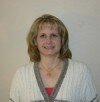 LYNETTA CAMPBELL
Data Analysis
Lynetta holds an M.S. in Mathematics, an M.S. in Management Science, a B.S. in Chemical Engineering.
Lynetta performs data analysis for clients in a wide range of disciplines including educational, industrial, and biostatistical applications. Experienced with many commonly used math and statistics software packages and programming languages such as all Microsoft products, SPSS, R, JMP, and Matlab. Tutor in both math and statistics.
Ms. Campbell worked twelve years in the chemical process industry, during which time she participated in the design, construction, and start-up of projects in polystyrenics. However, it was her work in the implementation of statistical quality control programs that lead her to focus on data collection and analysis.
Ms. Campbell teaches mathematics and statistics. Her students write that “she explains things clearly and does not make anyone feel stupid for asking questions.” She is a CRLA-certified tutor who takes great pride in helping students come to “own” the mathematical knowledge necessary to succeed in their chosen fields.
She has assisted graduate students with their data analysis in fields as diverse as engineering, education, and public health. She can assist clients with their initial exploratory data analysis, usually with a graphical approach to viewing the data. She makes sure each client understands the basics, such as how to properly state the null and alternative hypotheses, and how to test for equivalence using procedures such as independent sample or paired sample t-tests. She routinely helps clients in the selection of the proper regression methods to employ, helping them to understand generalized linear models, logistic regression, and logit and loglinear models. Her ultimate goal is always that the client gains a full understanding of what the data has to say. In this manner, she has worked with clients whose data was highly qualitative, such as survey data, and she has assisted students with highly quantitative data involving modeling and forecasting. She is highly proficient with SPSS, JMP, and R statistical software and programming languages.
 Lisa Di Mare
Education, Psychology, Public Health
Dr. LISA Di MARE, MPH, ScD is a graduate of Cornell University and Harvard University, School of Public Health. She has held Fellowships with The National Institutes of Health (NIH) and Teachers College, Columbia University. Lisa specializes in Family & Community Health and Program Evaluation, has authored several papers on Health Care Disparities and is federally approved (SAMHSA & DHHS) as an independent program evaluator. She has served on the faculties of numerous Graduate and Medical Schools, and has consulted to students in the Behavioral, Social, Organizational Management, Clinical, and Nursing Sciences for well over a decade.
Services include:
- Academic Editing
- Creating Hypothesis Statements/Research Questions
- Editing for Non-Native English Speakers
- Statistical Analysis: ANOVA, Chi-Square, Pearson’s, Regression, T-Tests, etc…
- Randomized Sampling
- Sample Size Estimates
- Study Design
- Survey Design
- Survey Monkey (Online Data Collection)
Areas of expertise include:
- Behavioral Sciences (General)
- Business & Leadership Studies
- Cross-Cultural Studies
- Education Studies (General)
- Family & Community Medicine
- Grant Writing & Development
- Medical & Social Ethics
- Nursing Practice
- Organizational Management
- Program Evaluation
- Social Inequality & Disparities
 TOM GREEN, Ph.D.has spent more than 30 years providing research methodological and data analysis support in academic settings using SPSS and SAS. Tom typically works on numerous scholarly projects each year. Tom assists students who are obtaining advanced degrees in psychology, counseling, education, public health, leadership, business, marketing, sociology, management, and nursing. He also worked for many years in marketing research and data processing positions in the health care industry. A popular instructor, Dr. Green teaches graduate-level research methods and statistics courses for Loyola Marymount University and Pepperdine University, both in Los Angeles. He prides himself in being able to explain most multivariate statistical tests in simple English without using complex mathematical formulas. Tom educates his clients so that they car take full responsibility for the contents of their study, and assists them in preparing for their oral defense. His formal education includes a Ph.D. in Clinical Psychology plus Master’s degrees in Theology and Industrial/Organizational Psychology.
For research proposals (Methods Chapter):
Tom provides technical assistance in the following ways: helping set up the research design, reviewing surveys, assistance in selecting appropriate statistical tests, helping determine needed sample sizes (power analyses), helping develop operational definitions; developing hypotheses/research questions; measuring constructs; and tutoring students in the understanding and usage of appropriate research and statistical terminology. Tom often edits the Methodology Chapter to ensure that the purpose statement, research questions, the hypotheses, the data gathered, and the statistical approaches are in accord.
For data analysis projects (Results Chapter):
Tom’s provides ethical assistance that does not conflict with your university’s plagiarism and academic integrity policies. Tom will first have a brief free consultation with the student’s thesis/dissertation advisor and gain the appropriate permission before any formal work is conducted. After securing written permission, Tom can provide any of the following services: create suitable SPSS files, help prepare the dataset for analysis, run relevant statistical tests or teach the student how to do it themselves, provide tutoring in the interpretation of SPSS output, and provide generic examples of how SPSS output could be transformed into APA style tables and narrative. After the student has the draft of the Results Chapter, Tom can then provide technical editing to ensure the findings are presented in a clear, accurate and compelling manner.