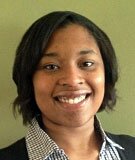
Dr. Vicki Lawrence is an academic researcher with a background in epidemiology and biostatistics. She studies social correlates of mental and physical chronic health inequities, and has provided statistical support on multiple studies with various investigators. She has worked with clinicians, research investigators, and tutored multiple graduate students in public health, epidemiology, social work, medicine, education, and nursing.
Dr. Lawrence works to ensure the students and researchers she collaborates with are comfortable with the theoretical rationale behind the methods appropriate for their research problems, and meets the students and researchers at their stage of understanding. In addition to explaining the foundations, she regularly provides each individual the opportunity to ask questions, and explains the differences in statistical approaches as needed. Further, she can help develop data analysis plans, refine research questions, and examine data collection methodologies as well.
In her own work, Dr. Lawrence has used exploratory/ descriptive analysis tools (such as t-tests) and nonparametric tests, ANOVA (including one way, two way, repeated measures and others), structural equation modeling, exploratory factor analyses, multilevel models, linear regression, logistic regression, multinomial regression, and growth curve modeling as well. She has prepared analytical methods sections for publications, including tables of regression outputs. Further, she can provide information relevant to epidemiologic methods, including prevalence, incidence, risk and rate ratios, causal diagrams (including mediating and moderating variables) and other topics as needed. She has used a variety of data sets of both varying magnitude, including nationally representative public data sets such as NHANES and the Panel Study of Income Dynamics, but has also used survey as well as medical systems based data. She has substantial experience using SAS and Excel, and also uses STATA, HLM and SPSS.
Education and Training
Postdoctoral Research Fellow in Psychiatry
Doctorate in Epidemiology
Master of Science in Biostatistics
Bachelor of Science in Public Health concentrated in Biostatistics
Relevant Experience
Assistant Research Scientist
Department of Health Behavior and Health Education (company confidential)
- Study neighborhood level social determinants of racial, gender, and aged based disparities in depression and cardiovascular health outcomes in urban Detroit
- Perform statistical analyses using multiple programs, such as SAS, HLM, SPSS
- Prepare manuscripts for publication
Postdoctoral Research Fellow
Department of Psychiatry (university confidential)
- Examine social determinants of racial, gender, and aged based disparities in co-morbid mental and physical health outcomes, as well as the impact of these factors on receipt of mental health treatments
- Perform statistical analyses using large sets of complex survey data, including the Panel Study of Income Dynamics and the National Health and Nutrition Examination Survey (NHANES)
- Prepare manuscripts for publication
Research Associate
Department of Health Behavior and Health Education
- Investigate underlying causes and contributing factors that influence the presence of health disparities, including those by age, race, and gender
- Design and perform statistical analyses using data from the National Survey of American Life, a complex survey of a nationally representative sample of Black Americans
Health Research Science Specialist
United States Department of Veterans’ Affairs
- Examine mental health outcomes among national samples of Veterans
- Prepare manuscripts for publication
Research Associate
Center for Social Epidemiology and Population Health (CSEPH) (university confidential)
- Prepared data for analyses, including extensive discussions as to the methods used in gathering and managing the data
- Prepared commentary on data collection methodologies from historic resources, including the census
Statistical Consultant
- Assist researchers and doctoral students with development of well-defined statistical analysis plans in accordance with research questions
- Provide thorough explanation of the purpose and details of specific statistical analyses using both SPSS and SAS
- Conduct statistical analyses as needed for health research projects using both SPSS and SAS
Graduate Student Research Assistant
Center for Social Epidemiology and Population Health (CSEPH) (university confidential)
- Compiled datasets and performed statistical analyses using the Panel Study of Income Dynamics, the Alameda County Study, and the NHANES datasets
Studied the role of mental health in relation to financial and employment measures - Worked with colleagues to study the impact of socioeconomic factors on health behaviors, immune function, stress, cardiovascular disease outcomes and mortality
- Worked with a study aimed to examine the transmission of influenza in campus dormitories
- Collaborated with investigators to create coding schema for subject responses
Statistics Tutor
- Weekly reviews of material covered in introductory graduate level statistics courses, including the use of SPSS and SAS statistical software
- Provide practice examples to illustrate and emphasize major points in the statistical interest
- Review homework problems and quiz materials to explain statistical reasoning and theories
Graduate Student Teaching Assistant
Longitudinal Data Analysis, Inter-political Consortium for Political and Social Research Summer Program in Quantitative Sciences (ICPSR)
- Provided computer lab tutorials in SAS and statistical assistance for repeated measures data
- Graded assignments and returned to students with feedback
- Studied and explained, as necessary, issues that generally arise in the analyses of repeated measures data
Instructor In Training
Department of Biostatistics, Biostatistical Inference Course (BIOSTAT 602)
Graduate Student Research Assistant
Center for Social Epidemiology and Population Health, Department of Biostatistics
- Began study of the national datasets NHANES, BRFSS and NHIS in order to understand health disparities in minority populations, and statistical approaches for analysis of such issues
Interviewer
Department of Health Behavior and Health Education
- Phoned African American residents of Wake County to complete surveys on access to resources in relation to health behaviors
- Entered data into SPSS
Research Intern
Project IMHOTEP, Morehouse College and Carnegie Mellon University
- Developed a research project on the cardiovascular health of young people, ages 12-30 years, based on risk factors including race, gender, exercise, diet, and smoking using the National Health and Nutrition Examination Survey under the guidance of faculty in the Carnegie Mellon University Department of Biostatistics
- Developed and executed the statistical analyses in STATA and SAS
Articles
Data Collection Methodologies for Health Research Projects
Why do We Need to Know the Data Distribution to do Our Analyses?
Why Use Census Data? Should You Use Census Data?
Writing Research Reports: The Elements of Health and Medical Research Report Writing
Feedback
“Dr. Lawrence was able to provide detailed information using all possible angles and (provided an) explanation that was understandable and ready to present in my final dissertation defense. If ever needed, will consult with her again.” – M. Castillo, EdD, Argosy University
“Vicki was excellent, prompt and extremely reasonable, and I highly recommend her.” – Phoebe Oakes, DNP Charlotte Orthopaedic Clinic
“Vicki was absolutely amazing to work with, no matter what my question I had she was able to explain what to do, why I should do that, and how to do it. She went above and beyond to make sure that I was happy with the statistics and my assignment, and in my understanding of it. She was quick and very knowledgeable, I was incredibly lucky to have received her help!” Katherine O’Connell, Masters student, University of Birmingham
“Vicki (consultant) was very helpful and helped me tackle a mountain of a task and leave a valley behind. I am very grateful for the clear guidance, exceptional quality and speed of communication. Most importantly, at no point did Vicki belittle me for asking what now appear to be petty questions. Should I pursue a similar project in future, I would definitely consult her again and / or recommend colleagues. Money is always a problem but I am not complaining at all as my financial situation was also positively addressed. Overall I am very satisfied with everything.” (On file with network coordinator)